

Planning a trip to the Land of the Rising Sun is an exciting endeavor, but one question always stands out: when is the best time to visit Japan? As you plan, it helps to explore interesting facts about Japan’s culture, nature, and technology to shape your itinerary better. Whether you are dreaming of walking through a storm of delicate pink petals during the cherry blossom season, exploring ancient temples shrouded in morning mist, or losing yourself in the neon-lit wonderland of pop culture, the timing of your journey will shape your entire experience.
Table of Contents:
Japan is a land of striking contrasts where centuries-old traditions and futuristic cities coexist in perfect harmony. But with so much variety packed into one country, the best time of year to visit Japan depends largely on what you want to see—and how you feel about sharing it with a few million other travelers.
In this guide, we’ll break down everything from weather patterns and crowd levels to famous festivals and travel tips, helping you choose the best time to go to Japan for your dream trip.
Geography 101: Must-Know Before You Go
Before you start looking for flights, it’s worth taking a quick geography lesson. Japan isn’t just one big island; it’s an archipelago of thousands of them, with four heavy hitters leading the way: Hokkaido, Honshu (Japan’s main island), Shikoku, and Kyushu. Stretching over 3,000 kilometers from north to south, the country experiences four distinct seasons, but the weather varies wildly depending on your location.
Because of this geographical stretch, the seasons in Japan arrive at different times. In the spring, the warmth starts in the south, meaning the sakura bloom first in places like Okinawa and Kyushu before slowly moving up toward northern Japan. However, if you are visiting for the autumn colors, the opposite happens: the vibrant reds and golds start in the north and travel down to the southern regions.
When asking yourself, what is the weather like in Japan?, remember that the Pacific Ocean side (where you’ll find major cities like Tokyo and Osaka) tends to be sunnier in winter, while the side facing the Sea of Japan gets much more snow. Understanding these regional differences is key to navigating the Japan travel seasons. For instance, while northern Japan is still experiencing heavy snow, the south might already be feeling the first signs of a subtropical spring.
FAQ:
What time of year is it cheapest to go to Japan?
What are the best and worst months to visit Japan?
What is the most expensive month to go to Japan?
What is the rainiest month in Tokyo?
Which month is the most crowded in Japan?
What month is the best time to go to Tokyo, Japan?

Spring: The Fleeting Season of Sakura (March – May)
For many travelers, spring is the undisputed best time to visit Japan. As cherry blossom season sweeps across the country, every street, city park, and riverbank transforms into soft clouds of pink and white—a fleeting spectacle celebrated nationwide.
At the heart of it all lies hanami, meaning flower viewing. This centuries-old tradition brings friends, families, and coworkers together for picnics beneath blooming sakura trees. For visitors from around the world, experiencing cherry blossoms in Japan is often a long-held dream and a moment that defines an entire journey.
Where to See Cherry Blossoms
If you’re searching for the most memorable views, you have two main options: exploring iconic natural landscapes or joining the festive crowds in urban parks.
Legendary Nature & Heritage Spots
- Hirosaki Castle (Aomori): famous for its petal-filled moats and over 2,600 cherry trees, often considered one of Japan’s most photogenic sakura spots.
- Mount Yoshino (Nara): home to more than 30,000 cherry trees covering the mountainside in layers of pale pink.
- Kakunodate (Akita): a beautifully preserved samurai district where cherry trees blend perfectly with traditional black-walled architecture.
Top Vibrant City Experiences
- Tokyo: visit Shinjuku Gyoen for a peaceful stroll across spacious lawns, or head to Ueno Park for a lively atmosphere filled with food stalls and local families enjoying their traditional picnics.
- Kyoto: stroll beneath falling petals along the Philosopher’s Path or visit Maruyama Park after dark, when cherry trees glow under nighttime illuminations.
- Osaka: explore the grounds surrounding Osaka Castle, where historic fortifications meet a sea of blossoms and energetic festival vibes.
Beyond the cherry blossoms and pleasant weather, spring is also a time for cultural celebration, most notably the Takayama Spring Festival, where you can admire ornate, centuries-old floats and traditional craftsmanship.
When to Visit for the Best Experience
The bittersweet truth of cherry blossom season is how short it lasts. From first bloom to full mankai, the entire spectacle usually spans just 10 to 14 days, with peak bloom often lasting less than a week. Exact dates vary each year depending on weather conditions.
Because the bloom moves gradually from south to north, travelers can sometimes “chase” the sakura across the country. If you miss peak season in Tokyo, you may still catch it a week later in northern Japan. To find the best time to travel to Japan for flowers, many visitors follow official Japanese sakura forecasts, which are updated daily throughout spring.
The Logistics of Spring
Spring may be Japan’s most beautiful season, but it is also one of its busiest. Several nationwide events influence travel patterns, accommodation availability, and crowd levels—making timing just as important as the cherry blossoms themselves.
Fiscal Year & School Trips
Late March marks the end of the Japanese fiscal year, a period of major transition. This is when people change jobs, move to new cities, and students have their spring breaks. Because of this, you’ll notice a massive wave of domestic travelers and school trips. While it’s a fascinating time to see the country in motion, it also means that major cities and popular landmarks can become exceptionally crowded.
The Golden Week
The biggest logistical challenge of the season is Golden Week, a cluster of Japan’s national holidays at the end of April and the beginning of May. This includes Constitution Memorial Day and Children’s Day, and it is the one time when almost the entire Japanese workforce goes on vacation simultaneously.
During this week, domestic tourism hits its absolute peak. If you are traveling during this time, you must book your hotels and Shinkansen seats well in advance.
Pro Tips for Spring Travelers
- Find the sweet spot: Aim for early April. This specific timeframe usually falls right after the Japanese fiscal year transitions settle down but before the Golden Week chaos begins.
- Post-Golden Week window: If you miss the sakura, the period immediately after the Golden Week offers pleasant, warm weather and significantly fewer crowds just before the rainy season sets in.
- The shinkansen rule: During peak periods like Golden Week, non-reserved seats on Shinkansen trains often vanish or the trains become reserved only. Always book your seats in advance to avoid being stranded on the platform.

Summer: Tropical Heat, Mount Fuji, and Festivals (June – August)
Summer in Japan is a season of extremes. If you’re planning a trip during these months, prepare for intense heat and heavy humidity—conditions that can come as a shock, especially for first-time visitors. However, if you can handle the rising thermometer, summer rewards travelers with some of the country’s most energetic cultural experiences.
Before we get to the fun part, it’s time for a quick weather reality check.
The Rainy and Typhoon Seasons
The rainy season, known as tsuyu, typically dominates from mid-June to mid-July. While the rain itself is usually manageable, the skyrocketing humidity is the real challenge. As summer deepens, the weather becomes even less predictable.
Late summer marks peak typhoon season, particularly in August and early September—something every traveler should keep in mind when deciding when is the best time to visit Japan. While not every trip is affected, storms can occasionally disrupt transportation, outdoor plans, or even long-anticipated traditional events, making flexibility an essential part of summer travel in Japan.
Climbing Mount Fuji: A Summer-Only Experience
Okay, so the weather can be temperamental, but summer isn’t all about dodging rain. In fact, for many, it’s the best time of year to visit Japan because of its unique outdoor opportunity: it’s the only time Mount Fuji is officially open to climbers.
The mountain’s hiking season typically runs from early July through early September, when trails, mountain huts, and safety facilities operate fully. Outside of this narrow window, climbing Fuji is strongly discouraged due to dangerous conditions.
For many travelers, reaching the summit in time to witness Goraiko—the sunrise above the clouds—is a once-in-a-lifetime experience and one of the most iconic adventures Japan has to offer.
Festivals, Fireworks, and Long Summer Nights
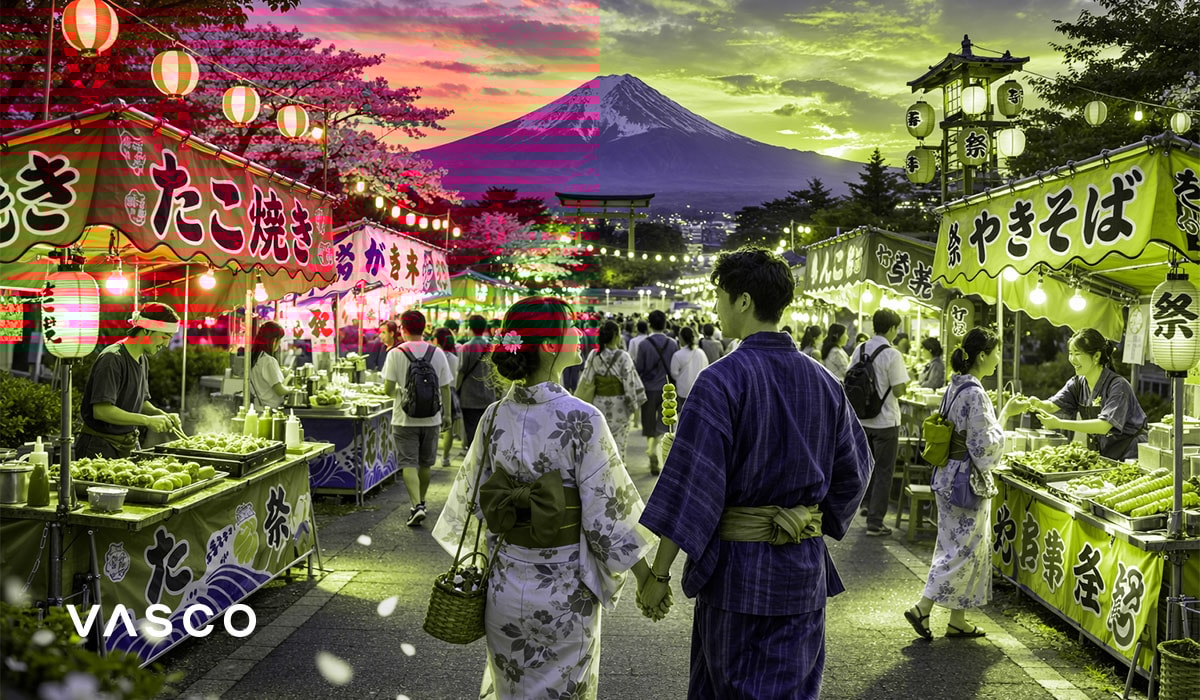
Beyond the mountains, summer is the season of matsuri (festivals). From Kyoto’s legendary Gion Matsuri to massive hanabi (fireworks displays) lighting up city skylines and riversides, the atmosphere across Japan becomes vibrant and celebratory.
Street food stalls, traditional dances, lantern-lit parades, and events transform even ordinary neighborhoods into open-air festivals. Just keep your plans flexible—as with everything in summer, weather always has the final say.
Pro Tips for Summer Travelers
- The cardigan trick: you’ll often find yourself in a constant battle between the sweltering heat outside and the polar air conditioning in trains and shops. Carrying a light cardigan or a long-sleeve shirt might actually be a smart move to avoid a summer cold!
- Escape to Hokkaido: Japan’s northern island largely avoids the traditional rainy season and stays noticeably cooler. With mild temperatures, lavender fields, and wide-open landscapes, Hokkaido is a favorite summer escape for locals.
- Catch early summer in Okinawa: for beach lovers, late June to early July can be a golden window. Okinawa’s rainy season often ends earlier than on the main island, offering tropical weather before peak summer crowds arrive—though it’s wise to monitor early typhoon activity.

Autumn: The Golden Splendor of Momiji (September – November)
For many seasoned travelers, autumn is the hidden favorite and arguably the best time to travel to Japan. While spring has the delicate pink of the sakura, autumn offers the fiery reds and brilliant golds of momiji (maple leaves). The best part? These colors last much longer than the cherry blossoms—usually from late September in the north to early December in cities like Tokyo and Kyoto.
A Mystical Atmosphere
As temperatures cool, Japan slowly shifts into a quieter, more atmospheric rhythm. Early autumn is the best time of year to visit Japan if you’re into moody scenery and timeless landscapes. Ancient temples, forested mountain paths, and sacred sites like the Okunoin Cemetery in Kōya-san are often wrapped in gentle morning mist, creating an almost otherworldly atmosphere.
In major cities like Kyoto, the landscape turns into a living painting. Iconic spots like the Kiyomizu-dera temple and the Philosopher’s Path offer spectacular views of the vibrant foliage. For those who want to find peace away from the crowds, the early autumn months provide a perfect balance of mild weather and moderate tourism levels.
Exploring the Great Outdoors
For active travelers, autumn is one of the finest seasons to explore Japan’s natural side. Hiking conditions are close to perfect, especially in the country’s alpine regions.
Both Minami Alps National Park and Chubusangaku National Park reach their most dramatic phase during autumn. Crisp mountain air, snow-dusted peaks, and sweeping valleys painted in seasonal colors make this the final—and often most beautiful—chapter of the hiking season. Every trail feels cinematic, and every viewpoint offers a panorama worth lingering over.
Watch Out for Silver Week
Autumn’s main logistical challenge is Silver Week, a cluster of national holidays that usually falls in September. While far less chaotic than Golden Week in spring, it can still trigger a noticeable increase in domestic travel, higher accommodation prices, and busier trains.
Once Silver Week passes, however, Japan enters one of its most comfortable travel periods of the entire year. October and November bring stable weather, cool evenings, and ideal conditions for exploring everything from historic cities to the heart of the Japanese Alps.
Pro Tips for Autumn Travelers
- Visit temples early or after sunset: famous momiji spots in Kyoto and Nikko can become crowded midday. Visit in the morning or experience magical autumn illuminations at night.
- Embrace seasonal flavors: autumn is harvest season in Japan. Look out for limited-time menus featuring chestnuts, sweet potatoes, persimmons, and matsutake mushrooms.
- Book weekends ahead of time: momiji season is extremely popular among domestic travelers. Even outside of Silver Week, weekends in October and November often sell out faster than expected.

Winter: Snow Monsters, Onsens, and Budget Travel (December – February)
If you’re looking for the cheapest time to visit Japan, winter is your best bet. From January to March, you’ll find the most competitive prices for flights and hotels, as the massive crowds of spring and autumn have long since dispersed. But don’t let the cold weather fool you—Japan in winter is cozy, romantic, and packed with unique activities.
World-Class Winter Sports
For winter sports enthusiasts, the Japanese Alps and the island of Hokkaido offer some of the best powder snow in the world. Whether you’re skiing in Hakuba or visiting the legendary Sapporo Snow Festival to admire its massive ice sculptures, northern Japan truly becomes a winter wonderland. If you’re lucky, you may even witness the famous Snow Monsters of Zao—trees transformed into surreal frozen figures by heavy snowfall.
The Magic of Onsens and Snow Monkeys
There is no better way to embrace the cold weather than soaking in a traditional hot spring. Sitting in steaming, mineral-rich onsen water while snow falls around you is one of Japan’s most iconic winter pleasures. For a postcard-perfect experience, visit Jigokudani Monkey Park, where the famous snow monkeys warm themselves in natural hot pools deep in the mountains.
City Lights and New Year Traditions
In major cities like Tokyo and Osaka, winter brings spectacular illuminations—elaborate light displays that transform shopping streets into glowing dreamscapes.
The New Year period in early January sees increased domestic travel, as locals visit shrines for their first prayers of the year. Once the holidays pass, however, winter becomes one of the calmest times to explore Japan. Even Kyoto’s famous temples feel quieter, occasionally dusted with snow and wrapped in an atmosphere of rare serenity.
Pro Tips for Winter Travelers
- The heat pack hack: Do as the locals do and buy kairo (disposable heat packs) at any convenience store. Stick them in your pockets or inside your clothes to stay toasty while exploring.
- Time your onsen visit wisely: outdoor onsens are most magical after sunset, when temperatures drop and steam rises into the cold night air.
- Warm up with food: Winter is the best time for nabe (hot pot dishes) and seasonal seafood like crab. It’s the ultimate comfort food after a day of sightseeing.

From Seasonal Planning to Seamless Travel
Now that you know the best time to go to Japan, there is one last thing to consider: communication. While major cities like Tokyo and Osaka are becoming increasingly English-friendly, many of Japan’s most memorable experiences—like staying at a traditional ryokan or ordering at a local izakaya—happen in places where English is rarely spoken, which is where practical Japanese to English translation tips become especially useful.
Thankfully, navigating Japan like a pro doesn’t require months of studying kanji; even if your phone fails or you lose access to mobile data, an off-the-beaten-track-ready language translator can keep you connected. Modern travel tech has filled this gap, and a dedicated device like the Vasco Translator that works in nearly 200 countries is a total game-changer. Whether you’re trying to decipher a complex subway map in the rush of Shinjuku or asking a local chef about the ingredients in your seasonal nabe, having a reliable tool by your side makes the experience seamless in common travel situations where you need a translator.
The biggest advantage? It comes with free, unlimited, and lifetime internet for translations, which is one of the key reasons you should consider buying a Vasco Electronics translator. This means you don’t have to waste time at the airport hunting for local SIM cards or searching for public hotspots. The device is always ready to go, ensuring you stay connected and understood from the moment you land, no matter which season you choose for your adventure.

Ready to Discover Japan?
Choosing the best time to visit Japan ultimately depends on what you want to experience—whether it’s the fleeting beauty of the cherry blossoms, the mystical atmosphere of autumn temples, or the quiet, snowy landscapes of the north. Each season tells a different story and offers a unique perspective on this incredible culture. Now that you are armed with the right knowledge (and perhaps the right tech to handle the language barrier), all that’s left is to pick your dates and start packing. No matter which month you choose, Japan is waiting to surprise you at every turn.
- Japan Guide, n.d. Climbing Mount Fuji. Available at: https://www.japan-guide.com/e/e6901.html
- Japan Guide, n.d. Seasonal events in Japan. Available at: https://www.japan-guide.com/e/e2282.html
- Japan Guide, n.d. Where to see cherry blossoms in Japan. Available at: https://www.japan-guide.com/e/e2011_where.html
- Japan National Tourism Organization, n.d. Festivals and events. Available at: https://www.japan.travel/en/see-and-do/festivals-and-events/
- Japan National Tourism Organization, n.d. Guide to skiing in Japan. Available at: https://www.japan.travel/en/guide/skiing/
- Rakuten Travel, n.d. Japanese national holidays: Golden Week. Available at: https://travel.rakuten.com/contents/usa/en-us/guide/japanese-national-holidays-golden-week/
- Stanford University, n.d. Geography of Japan. Available at: https://spice.fsi.stanford.edu/docs/geography_of_japan


