

Simultaneous or consecutive? It’s a question you often hit when booking language support for a conference, a courtroom, or a client meeting. This guide explains the difference and helps you decide which one fits.
Table of Contents:
Key Takeaways
- Simultaneous translation happens in real time, with the interpreter speaking only seconds behind the original speaker; consecutive translation happens after the speaker pauses.
- Consecutive interpreting tends to be more accurate — up to 95–98% in courtroom studies — but takes roughly twice as long as simultaneous interpreting.
- Simultaneous interpreting requires a two-person team, a soundproof booth, and equipment meeting ISO standards, making it costlier and better suited to large, multilingual events.
- An AI translator device such as the Vasco Translator V4 or Q1 offers a fast alternative to both for everyday conversations, though it doesn’t replace a certified interpreter in legal or medical settings.
- The right choice comes down to audience size, stakes, budget, and how tightly the event is scheduled.
The right choice usually depends on a handful of factors — audience size, formality, and how much precision the situation demands. That’s true whether you’re organizing a conference, coordinating legal or medical appointments, or planning a business trip abroad.
We’ll start with what each method actually means, then walk through where they’re used, how they compare on cost and accuracy, and how AI-powered devices are changing the picture.
What Is Simultaneous Translation (Interpreting)?
Simultaneous translation converts spoken language into another language in real time, with the interpreter “lagging” behind the speaker by up to a few seconds. Also known as simultaneous interpreting, it is commonly used at the UN, the European Parliament, and large international conferences, where stopping after every sentence for translation would disrupt the flow of the event.
Since the work requires intense concentration, professional simultaneous interpreters typically work in pairs, taking turns every 20 to 30 minutes. They usually work from a soundproof booth using headset and audio equipment that meets ISO standards. The result is fast and continuous, but the near-simultaneity of the process leaves interpreters almost no time to double-check word choice.
What Is Consecutive Translation (Interpreting)?
Conversely, consecutive translation — or consecutive interpreting — happens after the speaker pauses, rather than while they are speaking. The interpreter listens to a section of speech, often taking notes, and delivers the translation once the speaker stops. The sections can range from a single sentence to several minutes of continuous speech.
This mode requires no booth or transmission equipment, just the interpreter, a notepad, and strong short-term memory. That makes it a common choice for medical appointments, legal proceedings, and smaller business meetings, where accuracy and the ability to clarify something are often more important than speed.
FAQ:
What is concurrent translation?
What are the 4 modes of interpretation?
Which is more accurate, consecutive or simultaneous?
What equipment is needed for simultaneous interpretation?
Is there a device that can translate in real time?
Simultaneous vs. Consecutive Translation: Key Differences
With the basics defined, the key differences are easier to see. When people search for consecutive vs simultaneous interpreting, they’re usually trying to answer one practical question: which one fits my event? Here’s a breakdown of how simultaneous translation and consecutive translation compare across the factors that typically impact a choice between the two:
| Simultaneous | Consecutive | |
| Timing | Real-time, interpreter speaks while the source speaker talks | Interpreter speaks after the source speaker pauses |
| Equipment | Soundproof booth, headsets, transmission equipment (per ISO 17651 and ISO 24019 standards) | None required beyond a notepad |
| Interpreters needed | Typically two per language pair, alternating every 20–30 minutes | One interpreter is usually sufficient |
| Event duration | No added time — runs at the pace of the original speech | Roughly doubles the time, since translation happens in sequence |
| Cost | Higher, due to equipment rental and paired staffing | Lower, since it requires less equipment and staff |
| Best suited for | Conferences, large multilingual events, live broadcasts, high-profile briefings, governmental and institutional sessions | Legal proceedings, medical visits, business negotiations, smaller meetings or conferences, tours |

How Simultaneous Interpreting Works
What makes simultaneous interpreting so demanding isn’t the translation itself. The real challenge is doing two things at once: listening to new information while speaking a sentence based on something you heard just a few seconds earlier. Interpreters call this gap the ear-voice span. It typically lasts two to four seconds, but can be longer for languages with very different sentence structures. For example, in German the verb often comes at the end of the sentence, so the interpreter may have to hold more information in mind before knowing exactly how the sentence will end — only then can they start translating.
Quite obviously, the work is tiring. Interpreters have to keep listening, processing, remembering and speaking without losing the thread. Research on working memory in interpreting has found that performance drops sharply once local (current) cognitive load exceeds roughly four “chunks” of information held at once — a threshold that’s easy to hit mid-sentence in dense, technical speech. It’s the main reason professional interpreters usually work in pairs and switch every 20 to 30 minutes. After that much sustained concentration, accuracy can start to suffer.
For simultaneous interpreters, specialist equipment is practically a must-have. The idea is simple: providing as clean and distraction-free a working environment as possible. Soundproofing keeps out room noise. The headset delivers the speaker’s voice directly to the interpreter. The transmission system then sends the interpreted audio to listeners with minimal delay. Standards such as ISO 17651 and ISO 24019 standardize the acoustic and technical specifications for these booths, both fixed and mobile, so interpreter performance isn’t compromised by poor equipment.
Booth interpreting is the most common setup, but it’s not the only one. Remote simultaneous interpreting lets interpreters work off-site over a video and audio link, while whispered interpretation — known as chuchotage — has the interpreter sit beside a small group and quietly translate in real time, without a booth or headset at all. These are just two of several types of interpreting that exist alongside the two main modes covered in this guide.

How Consecutive Interpreting Works
In consecutive interpreting, the key skill is memory. Once the speaker pauses, the interpreter has to reconstruct an entire passage, sometimes several minutes long, without losing detail, tone, or intent. Most consecutive interpreters rely on a note-taking system: a shorthand of symbols, abbreviations, and the layout of the page that captures relationships between ideas rather than exact wording. The goal of each note is to trigger recall of meaning, not to transcribe speech — memory does most of the work, the notes just provide the structure.
This is also why consecutive interpreting is typically split into two forms. Short consecutive covers a sentence or two at a time, common in everyday business or medical conversations. Long consecutive — used in formal settings like legal testimony or diplomatic meetings — can involve several minutes of uninterrupted speech before the interpreter takes over.
There is another advantage to waiting. Because the interpreter speaks only after the original speaker stops, consecutive interpreting naturally provides room for clarification. If a phrase was ambiguous or a word was missed, there’s a pause to ask before delivering a translation. That extra checkpoint is a large part of why consecutive interpreting tends to score higher on accuracy than simultaneous, even though it takes longer.
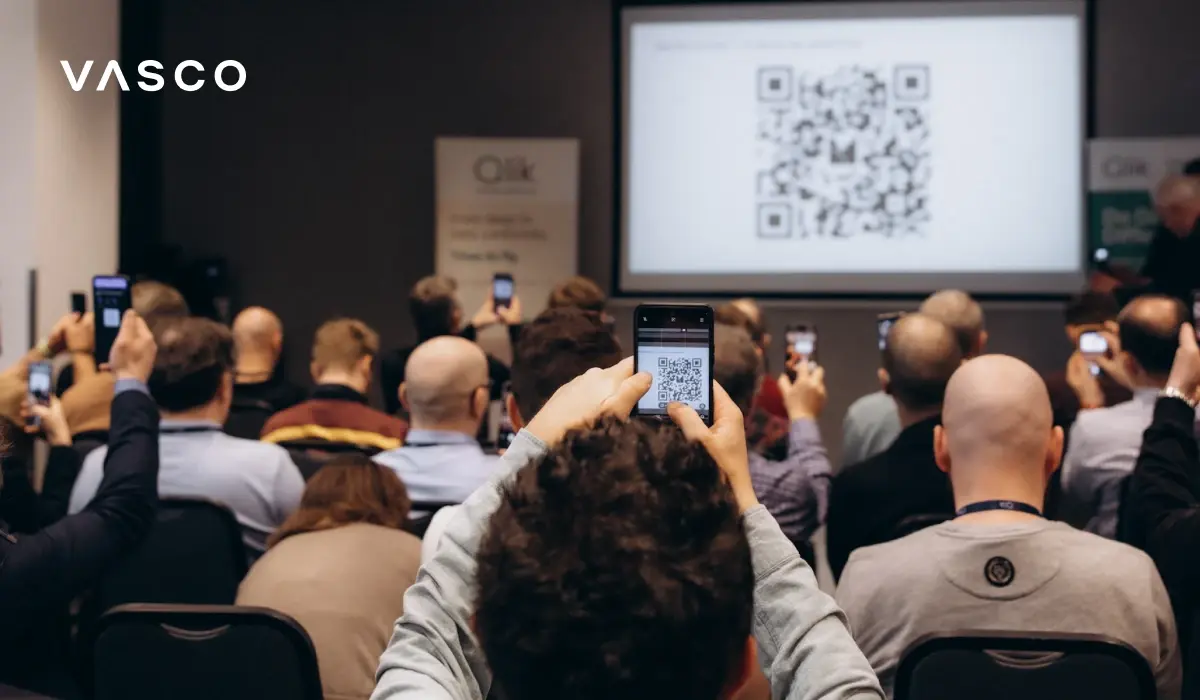
Where Each Method Is Used
Which mode makes sense depends heavily on the setting itself — here’s where each one tends to work best in practice.
Simultaneous translation fits large, multilingual events where the conversation can’t pause, keeping communication seamless for large or international audiences:
- Large conferences, EU and UN sessions, and live broadcasts, handled by a conference interpreter team working from a booth
- Corporate settings with a big or international audience — product launches, investor briefings, company-wide meetings — where stopping every few sentences would break the room’s attention
Consecutive translation fits smaller, higher-precision conversations, where getting it exactly right — and crossing language barriers without losing nuance — matters more than speed:
- Courtrooms and medical appointments, where a misunderstood detail carries real risk
- Business negotiations and corporate translation work, plus guided tours and client visits, where an interpreter can work without a booth or equipment
Accuracy, Speed, and Cost: Which Mode Wins?
There’s no single winner here — each method trades one advantage for another, depending on what matters most for the situation:
• Translation accuracy: consecutive interpreting tends to score higher. A widely cited study of court interpreting by linguist Debra Russell found simultaneous interpreting accuracy at roughly 83 to 87 percent, versus 95 to 98 percent for consecutive — though this gap is specific to courtroom settings and tends to matter less in lower-stakes business meetings.
• Speed: simultaneous translation wins clearly, adding virtually no extra time since it runs at the pace of the original speech. Consecutive translation roughly doubles session length, since every segment is said twice.
• Cost: simultaneous interpreting requires a booth, transmission equipment, and two interpreters per language pair — a higher cost that suits larger events. Consecutive interpreting needs only one interpreter and no equipment, making it cheaper for smaller meetings.
In short: simultaneous buys speed at a higher cost and a modest accuracy trade-off, while consecutive buys accuracy and lower cost at the price of time.
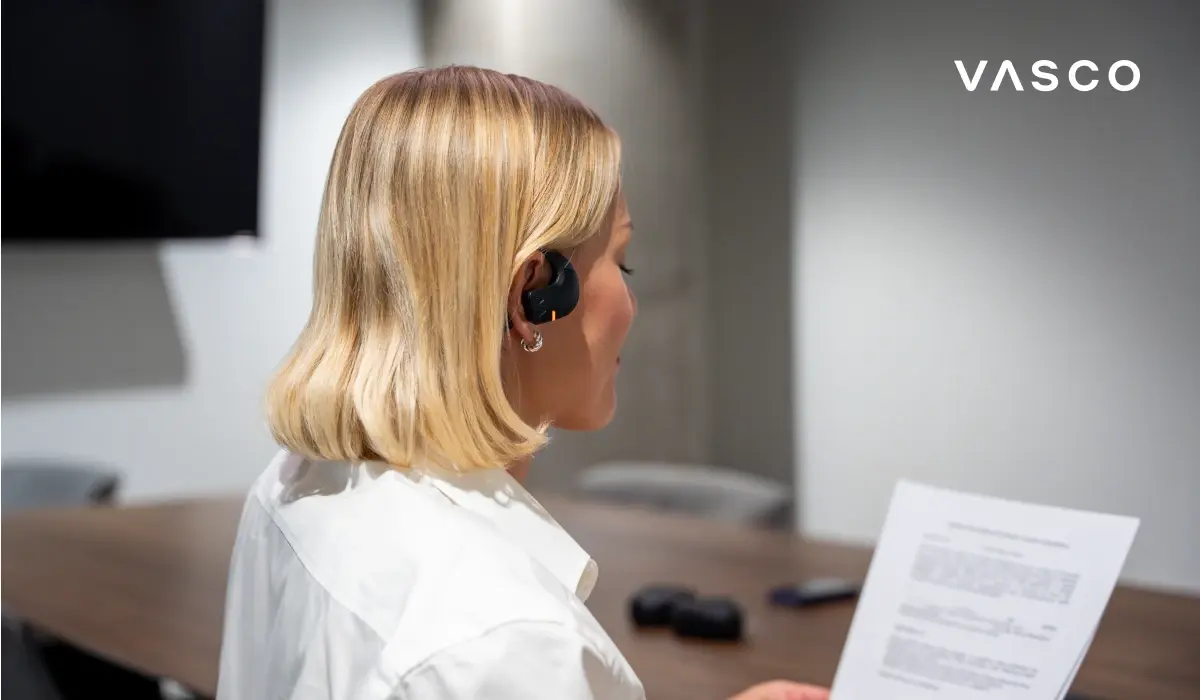
How AI and Real-Time Translation Devices Fit Into the Picture
Professional interpreting isn’t the only way real-time translation happens. Not long ago, translating on the fly outside a professional setting meant a phrasebook, a bilingual colleague, or a phone app that leaned on shaky roaming data. Over the past decade, AI translation has moved that experience into genuine business infrastructure — voice translation apps, live-captioning tools, and standalone devices now handle a huge share of everyday cross-language conversations. None of this replaces professional interpreting for high-stakes settings, but it has changed what’s available for everything below that bar: a supplier call, a factory floor visit, a trade show conversation.
What a Portable Translator Actually Does
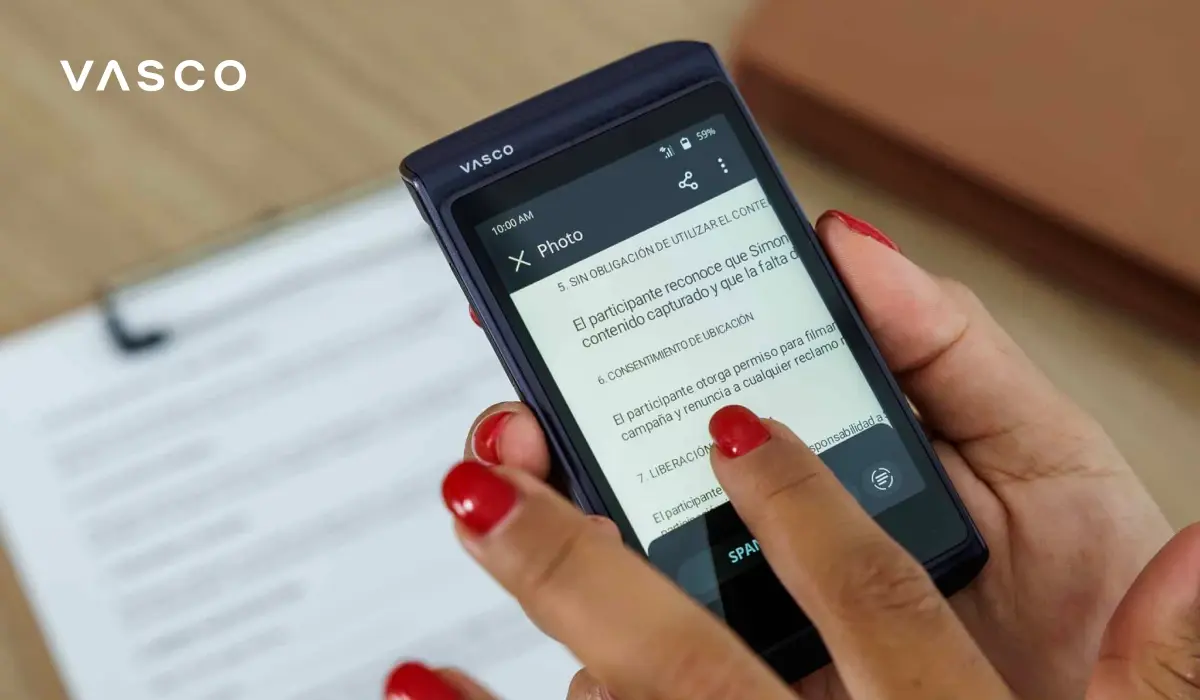
Standalone hardware — sometimes marketed as a real time translator device or, less precisely, a “simultaneous translation device” — is one part of that shift, alongside translation apps and browser-based tools. Often described as handheld translators, instant translators, or electronic translators, these compact devices are designed specifically for conversations rather than general-purpose computing. The Vasco Translator V4 or Q1, for example, combines a voice translator and text translator with a camera that can photo translate signs, menus, and other written content within seconds.
These devices are closer to a fast, automated form of consecutive translation than true simultaneous interpreting. Nevertheless, the delay can be short enough for a conversation to feel almost natural. For supported language pairs, accuracy can reach up to 99 percent, though that figure depends heavily on the input. AI translation tends to perform best with short, direct sentences, and can lose precision with idioms, jokes, or long, conversational statements where meaning relies on context rather than individual words. Even with that caveat, this kind of technology is useful for everyday situations such as a business dinner in a foreign country or a quick exchange on a factory floor.
Offline Translation: What It Can (and Can’t) Do
Connectivity can make a big difference, too. Vasco translators, for instance, come with a free, unlimited internet connection for life, so they don’t depend on a hotel’s Wi-Fi or a phone’s mobile data plan. This also supports what Vasco describes as offline translation: the device can continue to work in remote areas where there is no local network or cell signal, because its connectivity is built in rather than dependent on a nearby network.
Portable translation devices are not a replacement for certified interpreters in legal proceedings or high-stakes clinical situations, where accuracy and liability make a professional non-negotiable. But as an everyday AI translator device, tools like Vasco support day-to-day business communication across industries — from healthcare and manufacturing to hospitality and logistics — without the cost or lead time of booking an interpreter.
How to Choose the Right Mode for Your Situation
By now, the trade-offs between simultaneous and consecutive translation should be fairly clear. This brief wrap-up pulls them together into a set of practical questions that can help you decide:
| Question | Points Toward |
|---|---|
| Does the event have 50+ attendees needing multiple languages? | Simultaneous translation and a professional booth setup |
| Is it a one-on-one meeting or small negotiation? | Consecutive translation, or a language translator device for lower-stakes conversations |
| Are the stakes legal, medical, or contractual? | A certified human interpreter for high-stakes moments (testimony, diagnosis, consent, discharge instructions). For routine contractual or healthcare conversations, a translation device is often enough. |
| Is it an everyday, less formal exchange — a factory tour, supplier chat, trade show? | A handheld translator or instant translator device |
| Do you have plenty of lead time to book? | Simultaneous interpreting (two-person team, equipment) |
| Do you need something arranged on short notice? | Consecutive interpreting, or a translation device that needs no booking at all |
| Does the event need to stick to a tight schedule? | Simultaneous keeps things moving |
| Is there flexibility in how long things take? | Consecutive interpreting is a reasonable trade-off |
Whichever mode you land on, working out the logistics with your team ahead of time makes the biggest difference.

In a Nutshell
Simultaneous and consecutive translation tackle the same challenge — multilingual communication — in very different ways. Simultaneous translation happens in real time, alongside the speaker, and suits large, multilingual events where pausing isn’t an option. Consecutive translation happens after the speaker pauses and tends to be more accurate, which is why it’s the standard for legal, medical, and other high-stakes conversations. Cost, equipment, and event duration all follow from that core difference in timing.
For everyday, lower-stakes situations — a business trip, a factory visit, a quick negotiation, or a live event — AI-powered devices offer a third option: fast translation without the cost of hiring language services, and reliable internet access even in places with no local network. The right choice ultimately comes down to your audience, the stakes involved, and your schedule.
Sources / Bibliography
- AIIC (International Association of Conference Interpreters). “Professional Standards.” https://aiic.org/site/it/normeprofessionali
- ISO 17651-1:2024. Simultaneous interpreting — Interpreters’ working environment — Part 1: Requirements and recommendations for permanent booths. https://www.iso.org/standard/85014.html
- ISO 17651-2:2024. Simultaneous interpreting — Interpreters’ working environment — Part 2: Requirements and recommendations for mobile booths. https://www.iso.org/standard/85015.html
- ISO 24019:2022. Simultaneous interpreting delivery platforms — Requirements and recommendations. https://multilingual.com/iso-publishes-revised-more-collaborative-international-standard-for-rsi-technology
- NAJIT (National Association of Judiciary Interpreters & Translators). “Simultaneous Interpreting: Accurate or Timely?” https://www.najit.org/simultaneous-interpreting-accurate-or-timely
- Russell, Debra. “A Comparison of Simultaneous and Consecutive Interpretation in the Courtroom.”
- International Journal of Disability, Community & Rehabilitation, University of Calgary. https://www.ucalgary.ca/uofc/Others/ijdcr/VOL02_01_CAN/articles/russell.shtml
- Cowan, Nelson. “The Magical Number 4 in Short-Term Memory: A Reconsideration of Mental Storage Capacity.” Behavioral and Brain Sciences 24 (2001). https://www.cambridge.org/core/journals/behavioral-and-brain-sciences/article/magical-number-4-in-shortterm-memory-a-reconsideration-of-mental-storage-capacity/44023F1147D4A1D44BDC0AD226838496
- Loyola University New Orleans College of Law, Pro Bono Desk Manual. “4 Modes of Interpretation.” https://probonodeskmanual.loyno.edu/node/114
- The University of Hong Kong, Interpreting Programme. “Modes of Interpreting.” https://www.interpreting.hku.hk/modes-of-interpreting
- Vasco Electronics. “Electronic Translators.” https://vasco-translator.com/translators


