AI and machine translation now handle most everyday text and conversation almost as well as a human translator — instantly, for little or no cost. Here’s where human translation still wins, and how to tell which one you need.
Table of Contents:
Key Takeaways
- AI translation and machine translation aren’t synonyms. AI translation is the modern, context-aware branch built on neural networks; machine translation is the umbrella term that also covers older rule-based and statistical methods.
- For everyday text, travel, and most business communication, AI translation is fast, low-cost or free, and accurate enough — no certified translator required.
- Human translation still wins on nuance, ambiguity, and judgment, and stays legally required for certified documents: contracts, court filings, immigration paperwork.
- Speed and cost heavily favor AI translation (seconds vs. 2,000–3,000 words a day; free vs. $0.10–$0.30 per word), but long, high-context documents still favor human review.
- The practical B2B answer is often hybrid: AI translation for speed and volume, a human check before anything gets signed or published.
A supplier email, a product specification, a stack of documents — machines can now translate all of it in seconds. Whether that’s enough depends on what’s on the line: routine business text is one thing, a legal contract or medical record is another.
A professional translator still earns their fee handling the high-stakes content, where the cost of a mistake outweighs the time saved. For everything else, AI translation or machine translation — best paired with human oversight — usually does the job.
This guide is for travelers, expats, and B2B teams weighing an AI translator against a human translator for real situations: a business email, a contract, a conversation abroad. We’ll define AI translation, machine translation, and human translation, compare them on accuracy, speed, cost, and context, and walk through when each one makes the most sense — and when it still pays to hire a person.
FAQ:
How Many Languages Can an AI Translator Support?
Can AI Translate Official Documents Like Contracts or Visas?
Accurate Translations and Translation Errors: What to Know
Can You Upload a PDF or Translate Web Pages?
Do AI Translators Offer Enterprise-Grade Security?
AI Translation vs. Machine Translation: How They Relate
AI translation and machine translation get used interchangeably all the time — sometimes lumped together as “automated translation.” They aren’t quite the same thing, though.
Machine translation is the umbrella term. Any system that converts text or speech from one language to another without a human translator falls under it, including decades-old rule-based and statistical methods.
AI translation sits inside that category as the newer, “smarter” generation that weighs context instead of just swapping words or phrases one by one.
What Is AI Translation?
AI translation uses neural networks trained on huge volumes of bilingual text to translate speech or text between languages. Rather than matching words to a dictionary, the system predicts the most natural translation based on surrounding context — sentence structure, tone, sometimes even the topic under discussion. That’s what lets an AI translator handle idioms, slang, and conversational phrasing far better than older translation technology managed.
It happens in real time now, too — across text, voice, and photos of signs or menus. This is the technology behind voice translator devices, translation apps, and photo-translation tools used for everyday conversation and business communication alike.
What Is Machine Translation?
Machine translation predates AI translation by decades. Early rule-based systems relied on hand-coded grammar rules and bilingual dictionaries, often producing stiff, awkward results. Statistical machine translation came next, calculating the most probable translation from patterns in large volumes of paired text — better, but still prone to losing context in longer or more nuanced sentences.
Neural machine translation — the approach AI translation is built on — replaced both. Every AI translator is also a machine translator. Not every machine translator uses AI.
One thing worth clarifying: machine translation refers to translating written text. When translation happens for spoken language (sometimes called speech-to-speech translation), a separate speech-recognition step converts audio to text first. Machine translation translates that text and speech synthesis turns the result back into audio. The translation itself still happens on text.
AI Translation vs. Machine Translation at a Glance
| Aspect | AI Translation | Machine Translation |
|---|---|---|
| Underlying technology | Neural networks, large language models | Any automated method — rule-based, statistical, or neural |
| Context handling | Weighs sentence and conversational context | Older methods often work word-by-word or phrase-by-phrase |
| Typical example | Voice translator devices, modern translation apps | Covers AI translation plus older rule-based/statistical tools |
| Relationship | A modern subset of machine translation | The broader category AI translation belongs to |

What Is Human Translation?
A person, not software, does the translating here. That’s the whole distinction: human translation relies on a translator’s own understanding of both languages — grammar, tone, cultural context, and the intent behind a sentence, not just its words.
That judgment is what machine translation still struggles to fully replicate. A human translator catches humor, idioms, and ambiguity that a literal or pattern-based translation can miss, and can flag when something in the source text doesn’t quite make sense rather than translating it anyway.
Human translation isn’t one job, either:
- Freelance translators, usually specialized in a subject area
- Translation agencies, who manage larger or multilingual projects and quality checks
- Certified or sworn translators, authorized to produce official translations for government, legal, or administrative use
AI/Machine Translation vs. Human Translation: Key Differences
Neither approach is a one-size-fits-all. Each is strong exactly where the other is weak, and which one you need comes down to one question: what happens if this gets mistranslated?
AI/Machine Translation vs. Human Translation Comparison
| Aspect | AI/Machine Translation | Human Translation |
|---|---|---|
| Accuracy & context | Strong on everyday and business text; can still misread ambiguity, legal nuance, or subtle intent | Understands intent, tone, and ambiguity; can flag when something doesn’t make sense |
| Speed | Near-instant, regardless of length | Roughly 2,000–3,000 words per working day |
| Cost | Free or low, often bundled into a device or subscription | Typically $0.10–$0.30 per word, more for specialized or rush work |
| Scalability | Handles unlimited volume and dozens of languages at once | Limited by how many qualified translators exist for a given language pair |
| Privacy & sensitive content | Varies by tool — check for encryption and compliance certifications | Bound by confidentiality agreements and professional codes of conduct |
Accuracy and Context
In 2018, Microsoft researchers claimed their neural machine translation system had reached “human parity” translating Chinese news into English — a genuine leap in translation accuracy over older statistical methods. Other researchers pushed back once they tested it more rigorously: when human raters assessed whole documents instead of isolated sentences, they showed a stronger preference for human over machine translation. Machine translation held up sentence by sentence, but translation errors crept in across a full document — the kind of gap that only shows up once you’re reading the whole conversation, not one line at a time.
That gap narrows every year, but it hasn’t closed for high-context content: legal contracts, technical specifications, anything where one sentence depends on the one before it.
Speed and Cost
Speed isn’t close. AI and machine translation return a result in seconds regardless of length; a professional translator working for agencies is typically expected to produce 2,000 to 3,000 finished words per day to meet standard deadlines.
Cost follows the same pattern. Professional translation typically runs about $0.10–$0.30 per word, with the range driven by language pair, subject matter, and turnaround time. AI translation is usually free or bundled into a device or subscription, with no per-word cost at all.
Scalability and Privacy
AI and machine translation scale in a way no team of translators can. The same tool handles dozens of languages and unlimited volume at once, without hiring anyone new. Human translation scales by hiring, bound by how many qualified translators exist for a given language pair.
Privacy depends more on the specific tool than on the technology itself. Look for encryption, clear data-retention policies, and compliance certifications like GDPR — not every AI translation tool offers them, but it’s worth checking before sending anything sensitive through one. Many providers now explicitly confirm that conversations and documents aren’t used to train their models, which is worth verifying directly rather than assuming. Human translation carries its own version of this: confidentiality agreements and professional codes of conduct that bind a translator or agency.
How AI Translation Technology Works
An AI translator doesn’t see words the way a person does. It’s built on machine translation technology that converts them into vectors — long strings of numbers that capture meaning and relationship rather than just spelling. That single design choice is what separates it from the dictionary-matching of older machine translation.
A few things follow from that:
- Context first — The model weighs a word against a whole sentence (sometimes a whole conversation) instead of translating word by word.
- Multiple languages, same system — One model can hold dozens of language pairs at once, without retraining from scratch for each new pair.
- Consistency at scale — The model tracks context across an entire document rather than line by line, so terminology stays consistent from the first page to the last.
- Speed — The process runs in milliseconds, which makes real-time voice and photo translation possible in the first place.
Training data quality matters as much as the architecture. The European Commission’s own eTranslation system, for example, draws on more than a billion professionally translated sentences from EU institutions to power its translations — a reminder that even the best neural network is only as good as what it learned from.

Choosing the Right Solution for Your Situation
Neither AI translation nor a human translator is the “right” choice in the abstract. It depends on what’s on the table, who’s involved, and what a mistake would cost.
Everyday Conversations and Travel
For anything short, live, and low-stakes, automatic translation wins on convenience alone. Pocket devices like Vasco’s translators, which combine voice translator, text translator, and photo translate tools in one unit and come with free, unlimited internet built in for life (no local SIM or roaming plan needed abroad), handle the bulk of what travelers and expats actually need:
- Asking for directions or ordering food
- Reading a menu, sign, or transit schedule with a photo translate feature
- Making small talk with a host family, neighbor, or local shopkeeper
- Checking into a hotel or navigating customs
None of this needs a certified professional. The cost of a wrong word is a confused look, not a legal problem.
Business Communication
B2B work raises the stakes slightly, but most of it still favors AI translation — email threads, internal messages, quick product questions, first-contact conversations with an overseas supplier or client. A language translator device or app keeps a meeting moving without waiting on a scheduled interpreter. Some go further: Vasco’s phone call translator can translate a live mobile phone conversation in real time for both sides — a serious advantage in business relationships.
Where it gets more sensitive: multi-party negotiations, anything that will be quoted back later, or a first meeting with a new client where tone matters as much as content. That’s often where a quick AI translation for the gist, followed by a human check before anything gets signed, works best.
Legal, Medical, and Certified Translation
This is less about the technology and more about the format. AI translation devices are seeing real adoption in medical and law-enforcement settings for real-time spoken communication. A number of police departments have piloted or deployed handheld and body-camera-integrated translation tools for traffic stops, field interviews, and emergency calls, while hospitals increasingly rely on similar tools for patient intake and triage.
Some devices are even designed to meet the enhanced requirements specific industries demand: Vasco’s translators are HIPAA-compliant across the line, and the V4 model adds dust, shock, and water resistance for use in demanding law enforcement settings. In both cases, the goal is mutual understanding in the moment, not a certified paper trail.
Certified or sworn translation is a different task: producing an official written translation of a document — a contract, a court filing, immigration paperwork — that a government body, court, or institution will accept as legally valid. That almost always still has to go through a certified or sworn human translator: most jurisdictions won’t accept an AI-translated document for that kind of official use, regardless of accuracy.
High-Stakes and Nuanced Content
Marketing copy, brand messaging, literary or creative work, anything where tone and cultural fit matter as much as literal meaning — this is where machine translation’s context-blindness becomes a real liability rather than a rounding error. A mistranslated idiom in a text message is forgettable. The same mistake in an ad campaign is not.
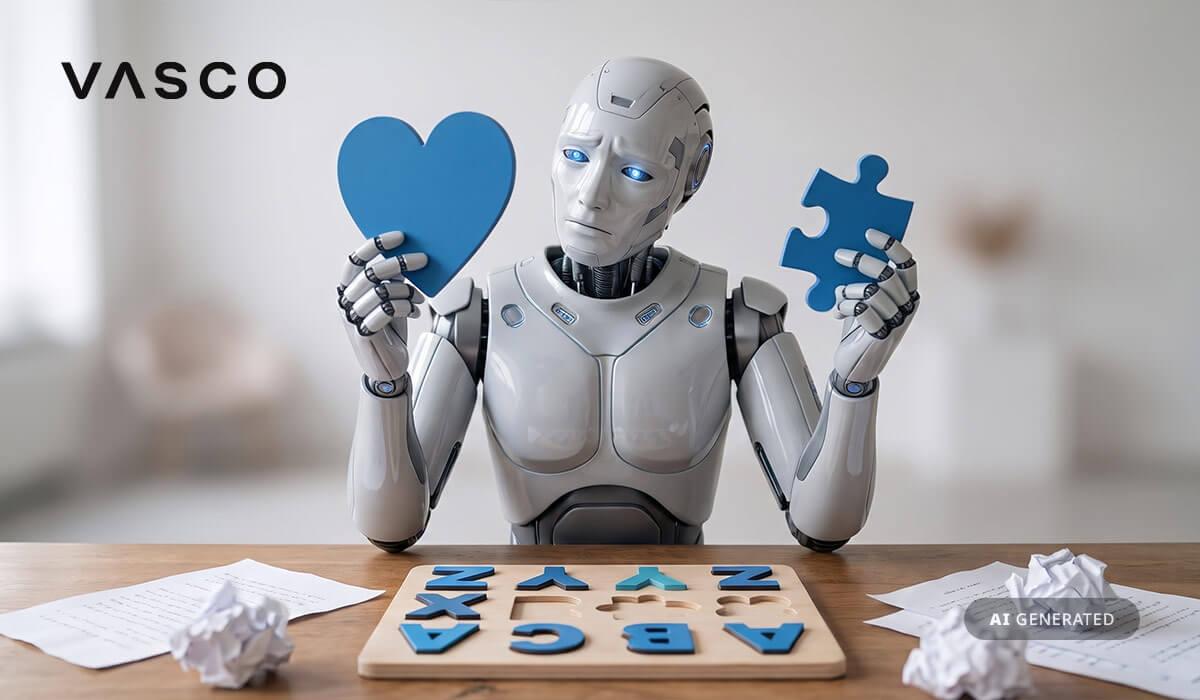
In a Nutshell
AI translation vs. human translation, or machine translation vs. human translation — however you frame the question, neither wins across the board. They’re suited to different jobs. AI translation and machine translation help people communicate across language barriers in seconds, for little or no cost, and the quality keeps improving. What they still miss is deep context: legal nuance, cultural subtlety, and the judgment to know when something in a document doesn’t add up. That’s where a human translator remains essential, and in most countries, legally required for certified documents like contracts and immigration paperwork. For businesses working across languages, the practical answer is usually both: AI translation for volume and speed, with human review layered in wherever a mistake would actually cost something. Devices that combine voice, text, and photo translation in one tool make the AI side of that equation easier to act on, but they don’t replace a certified translator when the situation calls for one.
Sources / Bibliography
- Hassan, H., Aue, A., Chen, C., et al. “Achieving Human Parity on Automatic Chinese to English News Translation.” Microsoft AI & Research. https://arxiv.org/abs/1803.05567
- Läubli, S., Sennrich, R., & Volk, M. “Has Machine Translation Achieved Human Parity? A Case for Document-level Evaluation.” Proceedings of EMNLP. https://aclanthology.org/D18-1512/
- Koehn, P., Och, F. J., & Marcu, D. “Statistical Phrase-Based Translation.” Proceedings of HLT-NAACL. https://aclanthology.org/N03-1017/
- Sarim, M., Shakeel, S., Javed, L., Jamaluddin, & Nadeem, M. “Direct Speech to Speech Translation: A Review.” arXiv. https://arxiv.org/abs/2503.04799
- Training for Translators. “Webinar Question: How Many Words Per Day?” https://www.trainingfortranslators.com/2011/01/20/webinar-question-how-many-words-per-day/
- Ad Hoc Translations. “What Drives Translation Rates in 2026 — And Why Transparency Matters.” https://www.adhoc-translations.com/?p=47811
- Global by Design. “The Translation Delta Between AI and Humans Is Shrinking.” https://globalbydesign.com/2025/05/09/the-translation-delta-between-ai-and-humans-is-shrinking/
- European Commission, Directorate-General for Translation. “AI-Based Multilingual Services Using EU Language Data.” https://translation.ec.europa.eu/language-data-and-ai-using-ai-break-down-language-barriers/ai-based-multilingual-services-using-eu-language-data-innovate_en
- Yahoo News. “Police and Big Tech Have a Plan to Eliminate Language Barriers.” https://www.yahoo.com/news/articles/police-big-tech-plan-eliminate-110105919.html
- Vasco Electronics. “Vasco Translator V4.” https://vasco-translator.com/us/vasco-translator-v4
- Vasco Electronics. “Vasco Electronics Announces HIPAA Compliance for Its Translation Devices.” https://vasco-translator.com/articles/press-release/vasco-announces-hipaa-compliance/